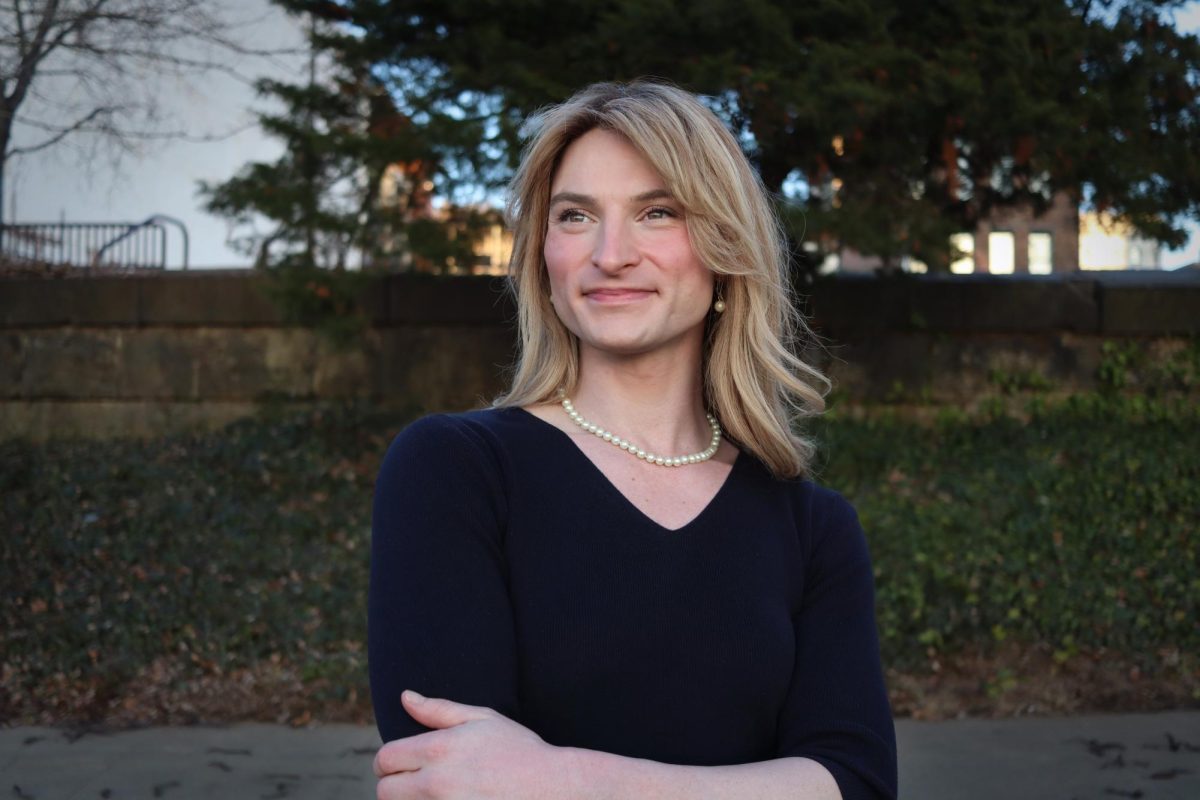
Wheeling was deemed The Friendly City once, but as years have passed, people seem to forget that title. For people like Rosemary Ketchum, not only are the representations of this friendliness, but a staple in Wheeling communities to keep it progressing towards a better future. Wheeling has never been a place to lose hope in; it’s been a place to keep believing in.
Long before Rosemary Ketchum became known for her advocacy for preservation, community, and LGBTQ+ visibility, Ketchum saw something in Wheeling that most overlook. It wasn’t just the saying that went with Wheeling, but the history that made her start projects to help improve Wheeling.
“Preservation and advocacy became a way for me to say: this place matters, and so do the people who call it home,” said Ketchum.
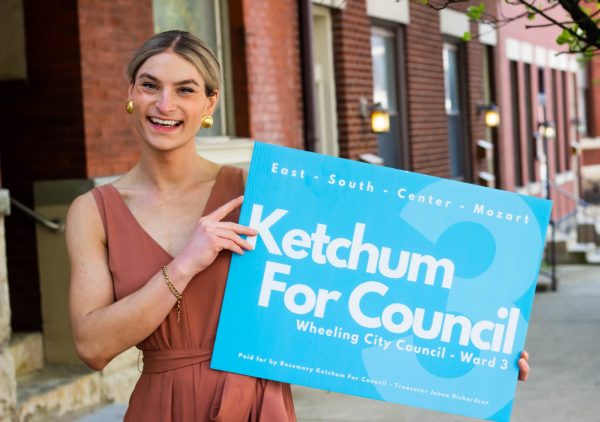
This is because Wheeling isn’t just a tiny town at the top of West Virginia, but a community that people have grown up in, found friends in, and so much more. Ketchum explains that the historic buildings and neighborhoods that line the streets of Wheeling can not be dismissed any longer and that preservation needs to be seen. Preservation is potential, and she’s helping the city see that.
“Wheeling has always felt like a place full of potential that didn’t quite get the credit it deserved. I was motivated by seeing historic buildings, neighborhoods, and people overlooked or written off, even though they carried so much value,” said Ketchum.
While most Wheeling residents have lived here all of their lives, Rosemary spent her teenage years in Wheeling- which is arguably some of the best years to be here. Many find their home in many different places, Rosemary found herself calling our tiny town home. Even though Wheeling is far from perfect, perfection doesn’t have to be the end result.
“Wheeling is home in the deepest sense. It’s where my values were shaped, where I learned resilience, and where community still means something real. It’s imperfect, but it’s honest and I feel a responsibility to help it grow in ways that honor its past while making room for everyone,” said Ketchum.
Wheeling seemed to have left a good impression, because Rosemary stayed, and instead of just living here, she fights everyday to improve it for others. In fact, Wheeling isn’t only tagged as The Friendly City, but a Rust Belt City. This connotation can have negative effects on the community, especially when trying to ameliorate the community.
“The label can be limiting when it focuses only on decline, but it can also be empowering when it highlights resilience. Rust Belt cities know how to adapt, rebuild, and support one another – we’ve been doing it for generations and will continue to,” said Ketchum.
For something to change, you have to make those changes, and for Rosemary, she did. With her preservation efforts on a historic building in South Wheeling, she found that she needed to make the changes she wanted to see.
“For years I talked the talk without walking the walk about preservation and I decided that I wanted to own a piece of Wheeling spirit! Like anyone who owns and old hows knows the work never ends but I feel great about being part of the larger movement in Wheeling to protect, preserve and share the stories of our great buildings.” said Ketchum.
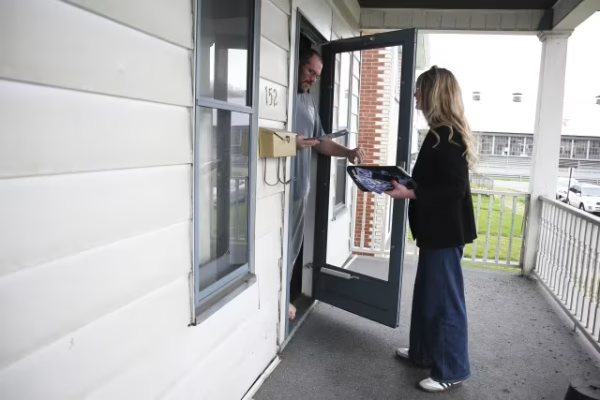
That is exactly what she did. While doing this, she explained how inclusion and historic preservation can go hand and hand. A common misconception about enhancing Wheeling is that you have to take it step by step, and while this is somewhat true, you don’t have to do things one at a time. Some things can just shape into working together in the best ways possible.
“Historic preservation isn’t just about buildings; it’s about memory and belonging. It helps us understand the whole story of a community – not just the pretty parts. Inclusion strengthens preservation because it ensures we’re protecting a fuller, more honest version of history,” said Ketchum.
Beyond historical preservation, Rosemary Ketchum’s advocacy stretches farther to visibility and inclusion, particularly in Wheeling’s LGBTQ+ community. Ketchum is the Co-Chair of the Friendlier City Project and one of the founders of the group, exemplifying her dedication to the community. Her role in helping bring the annual “Pride on the Plaza” to the city was rooted in the hopes to make the LGBTQ+ community know that they are a part of the city too, and not to be hidden.
“I wanted LGBTQ+ people to feel visible, celebrated, and safe in the heart of the city – not hidden away. Pride on the Plaza was about claiming space and saying: we belong here, too. The Friendly City is not just a great tagline, it is a reality.” said Ketchum.
Looking ahead, Ketchum envisions a developing Wheeling, where history, progress, and inclusion continue to grow stronger and reinforce one another.
“A more inclusive Wheeling is one where everyone sees themselves reflected in leadership, public spaces, and community decisions,” said Ketchum.
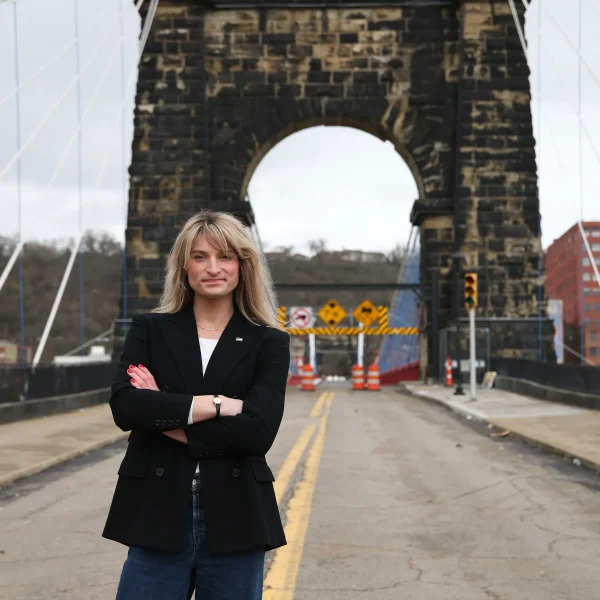
Despite the challenges faced, Wheeling has overcome time and time again, and it’s because of the people. Ketchum remains hopeful for the improvement of Wheeling largely because of the people who continue to be the backing of change.
“The people. There’s a growing group of residents who are invested, imaginative, and committed to making Wheeling better not by copying somewhere else, but by leaning into who we are. The young folks who have decided that they want to live in Appalachia not because they have limited options – the world is at their fingertips but because they understand the value and beauty a place like Wheeling can offer,” said Ketchum.
For the younger generations of Wheeling, and those hoping to strive towards change in their own communities, Ketchum offers simple and powerful advice.
“Don’t wait for permission. Start small, stay consistent, and believe that your voice matters. You will find that you will build a stronger community and lifelong friendships along the way!” said Ketchum.
Together, her work in all of these fields- advocacy, preservation, and visibility reveals a deeper meaning, one that has helped guide her in the first place. “The Friendly City” shouldn’t just be a tagline that withers as the years go on, it should be protected, pushed, and passed on to future generations.