

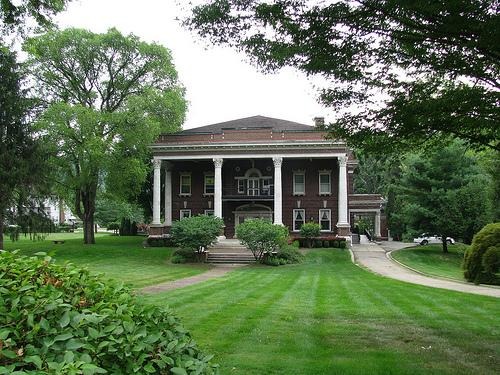
Wheeling City Council has recently approved plans for a 60 million dollar multi-use event center to be built right across from Wesbanco Arena. This development would call for the demolition of the 1400 block of main street, including the former Wheeling Coffee and Spice storefront, which dates back to the 1850s.
But is this really what the city of Wheeling needs?
This ambitious development and demolition is not an isolated project, in fact many Wheeling residents have realized that in recent years Wheeling has been moving quickly towards demolition, rather than renovation.
Starting in the 90s, Wheeling had begun to demolish historic and old buildings at a rapid pace. More often than not, the structures that would replace these buildings were uninteresting eyesores – or in many cases, nothing at all,
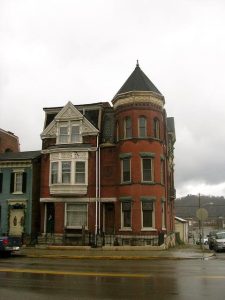
“We have so much history that people don’t know about, and we can’t destroy the evidence of that history” said junior Brice Ritchea, a recipient of the Golden Horseshoe award – a prestigious honor given to students with exemplary knowledge of West Virginia history.
In late 2024, the demolition of the former OV Medical Center, which had history dating back to the 1890s, was completed to make way for a new regional cancer center. In 2025, the former Wheeling Inn was demolished to make way for a state of the art Visitors Center in the heart of Downtown Wheeling. In both cases, construction of these new buildings have yet to be started.
The demolitions will not stop there. Despite strong efforts from community members, The Clay School building in South Wheeling is set to be demolished as early as late April according to The Intelligencer, in addition to the normal scattering of historic Wheeling homes that are demolished each year.
Andrew Hollis is the owner of Wheelcraft Bicycles in Elm Grove, but is also behind a popular self-named wheeling history social media page on Facebook and Instagram. Recently he has posted about his discontent with historic buildings in Wheeling being demolished,
“Overall Wheeling tears down about 20 buildings every year, mostly in the older neighborhoods,” said Hollis. “Many do need to be torn down at a point but we really need to catch them prior to that, or at least give someone the chance to renovate.”
Renovation has proved to be a successful venture in Wheeling, with places such as Waterfront Hall and 1306 Market Street being evidence of that.
So, coming back to the multi-million dollar project planned for downtown Wheeling – a simple question could be asked:
What if that 60 million dollars went towards renovation?
Just up the road from this new development is the historic Rogers Hotel building, a six-story tall former hotel opened in 1915. A little further down the waterfront is The Absure Tower Building, a momentous high-rise with stunning Beaux Arts architectural design dating back to the early 1900s. 60 million dollars could go a long way for these vacant historic buildings.
Many believe that the City of Wheeling has a distinct aesthetic, owing to its historic buildings spanning multiple generations and styles. These buildings are what separate Wheeling from any other run of the mill city along a highway, and with demolishing them, we risk losing our very identity.