
At our high school, many students and teachers come from different countries, so everyone celebrates Christmas in their own way. Some traditions happen on different days, some include special foods, and others have unique family customs that don’t exist in the United States. Talking to people from Austria, Sweden, Spain, Germany, and Ghana showed me that even if Christmas looks different everywhere, the meaning behind it stays very strong.
Exchange student Mathias Gelbmann from Austria celebrates on December 24th. He said that his family goes to church in the morning and then shares a big Christmas dinner.
“We open presents the evening of December 24th,” Gelbmann said. In Austria, Christmas Eve is the most important part of the holiday.
From Sweden, Alva Hedin also celebrates on the 24th, but with a tradition many people here don’t know about.
“At 3 p.m. we always watch Donald Duck before dinner,” said Hedin. Swedish families have watched Donald Duck for decades. After that, they eat a special dinner together and open all their presents at night.
Exchange student Daniel Brazal explained that Christmas in Spain lasts much longer.
“The main tradition is the Three Kings who bring the biggest presents on January 6th,” Brazal said.
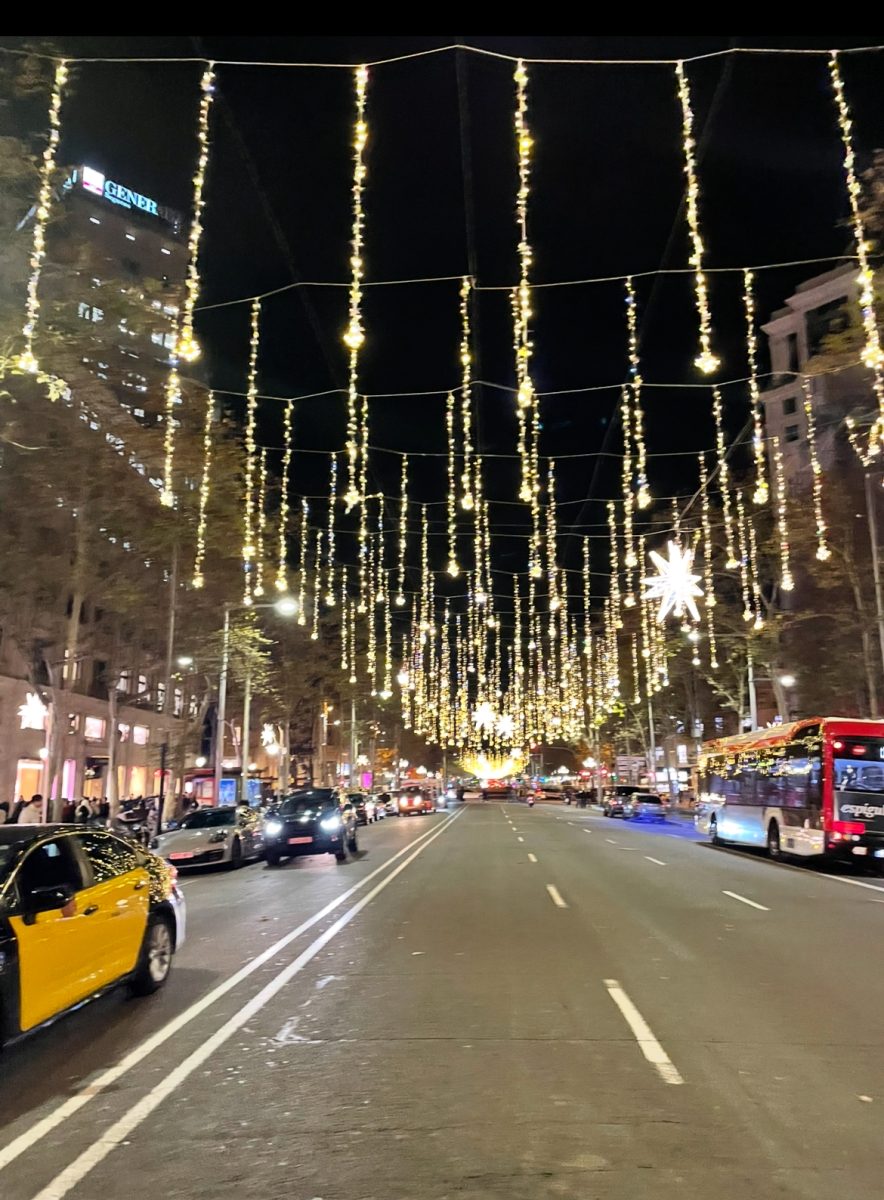
Although Spanish kids sometimes get a gift from Santa, the real excitement comes with the Three Kings which is celebrated with a parade on the eve.
“La cabalgata–the big parade where the Three Kings throw candy and bring joy to the kids,” said Brazal.
Spanish teacher Ms. Gonzalez, from the south of Spain, shared that Christmas in her family is very connected to the Religion.
“In Spain, some people celebrate more the Nativity of Jesus than the Christmas tree,” Ms. Gonzalez said.
Her family spends Christmas Eve singing, eating together, and visiting relatives the next day. What she misses most is the food, the Christmas songs, and having all the family together.
Some people keep traditions from their families’ cultures even after growing up in the United States. Mrs. Dillon, whose ancestral family is from Germany, has a fun custom for Christmas.
“There is a pickle hidden in the Christmas tree and the first one to find it has an extra present,” Ms Dillon said. Many Americans haven’t heard of this tradition, but it’s popular in some German families.
Mr. Philip Titus-Glover, who grew up in Ghana, remembers Christmas very differently. Shopping for gifts happens the day before Christmas, and people don’t expect many presents.
“You will probably receive one only present,” he said.
What Mr. Titus-Glover loves most is how Christmas in Ghana is focused on people.
“It’s more about being out with friends, eating good food, and spending time with family,” Mr. Titus-Glover said.
Talking to so many people made something very clear: Christmas looks different depending on where you come from, but it is special everywhere. Whether it’s watching Donald Duck in Sweden, waiting for the Three Kings in Spain, or sharing food in Ghana, every tradition has the same goal: bringing family and friends together, and that’s what makes Christmas meaningful all around the world.