


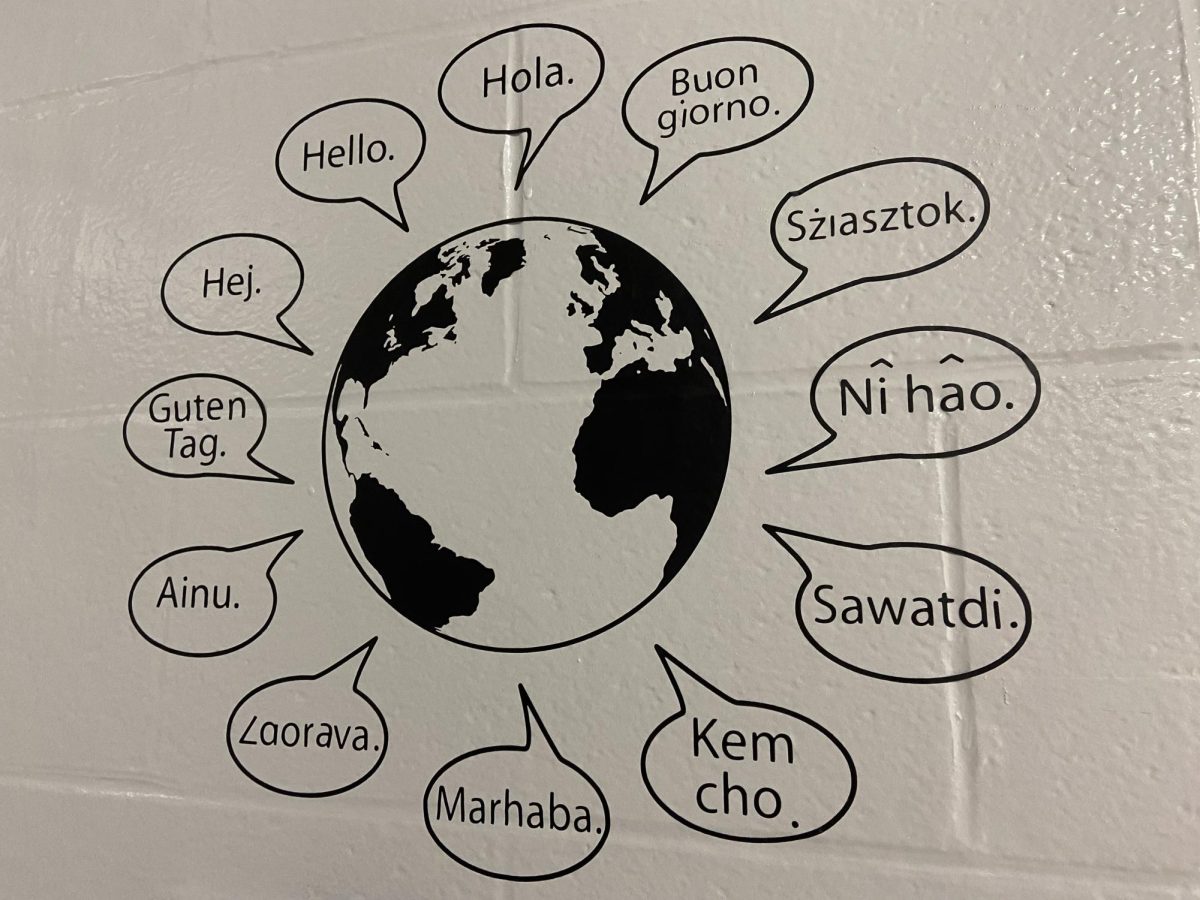
Across the United States, a large-scale topic that has been heavily debated is the issue of immigration. Legal or illegal, the word “immigration” has been given a largely negative connotation by both politicians and citizens alike. Most recently, the U.S. Immigration and Customs Enforcement (ICE) has been increasingly active in many communities, including local ones such as the City of Wheeling, West Virginia.
While the issue of whether or not ICE’s actions, at their core, are at all justified is largely up to debate, the more glaring problem is that immigration is consistently viewed as a bad thing. The United States used to serve as a safe haven for immigrants, either wanting to begin a new life or perhaps escape an oppressive government, but has since become a place where they are targeted, discriminated against, and victims of violence. The way to incite this needed change, though, is to explore the history of immigration– specifically in Wheeling– and show how immigration is not the horrible process it is made out to be in the 21st century.
History of Wheeling teacher Mr. Stanton said, “Wheeling is known as a melting pot of immigrants who came here, especially during the 1840’s and 1850’s when many were facing turmoil and uncertainty in their own countries. German, Polish, and Irish immigrants made up a big part of Wheeling’s population during the American Revolution. Those groups also took a lot of pride in their heritage. For example, Germans had their own schools, newspapers, churches, banks, and businesses.”
Wheeling was essentially built on immigration, and without it, a lot of the amenities and experiences the city provides wouldn’t exist.
“Not only did these people contribute to the success of our city, but even to this day they are still giving back. For example, the Stifel scholarship that we know today started with a German family who came here with practically nothing and created a textile company that would become one of the largest in the United States. Today, this family still gives back to the community with the Stifel Scholarship Foundation,” said Stanton.
While it may be hard to imagine the impact immigration has historically had on Wheeling, something undeniable is that Wheeling Park High School has been directly impacted by immigration– more specifically, two amazing educators in the Foreign Language Department. Mr. Titus-Glover from Ghana and Mrs. Gonzalez from Spain are two prime examples of inspiring stories of immigration to Wheeling that really hit close to home.
Mr. Titus-Glover grew up in Ghana before going to teach French in Senegal, and there he met his now wife, Middle Creek Elementary teacher and Wheeling native Mrs. Titus-Glover. After that, they moved back to Wheeling where they raised their children.
“I grew up in Ghana in West Africa and I love Ghana. It’s very tropical and the types of foods are very different from what we eat here, and that’s probably the thing I miss most is the food, but of course family too. I was studying French in Ghana, and Ghana speaks English, and the way the program was set up was that if you studied French, they’d send you to a French speaking country for a year, so that got me to Senegal where I ended up teaching. I studied for a year, I was supposed to go back and finish my final year in Ghana, but I didn’t because I got a job teaching there. My wife who grew up in Wheeling was teaching at the same school where I ended up teaching, and so that’s how we met. We taught together for a year and then she went back to the States, then three years later she came back and our friendship continued, and we eventually got married there in 2002 and came to Wheeling in 2005,” said Titus-Glover.
Mrs. Gonzalez, on the other hand, grew up in Spain and lived in many other places before coming to Wheeling with her now husband. They debated going back to Spain a few times before starting their family, but they ultimately decided Wheeling was the best choice for numerous reasons.
“I met my husband when I came to the United States to study abroad for six months to get better at speaking English, and then when I returned, I went to England for two years. Then, when I came back, he found me again and he came to Spain. I wanted to stay, I didn’t have any intention on moving to the United States, but we decided for him to finish school and then we’d come back to Spain. So, in the meantime, we got married and he came back after I finished my mission and we worked on my visa. It took us about a whole year. You get a probationary visa, you have to be married for that many years and prove it, all that stuff. We started having kids and we hoped when he was done with school, we’d go back to Spain and we did, but he wasn’t able to find a job over there in his field. So, we decided to come back to the United States and we’ve been here for 25 years,” said Gonzalez.
The process of immigration itself is extremely complicated, likely more than most people realize it is. Both Mr. Titus-Glover and Mrs. Gonzalez went through their own journeys of becoming a U.S. citizen and what it meant for them as people.
Titus-Glover said, “There were a number of different ways you could move here, one of them being if you married an American citizen. It was kind of a fast-track but not really, it did involve less paperwork but I still had to go through interviews, medical reports, and I had to get a police report from each country I’d lived in, which at that point was both Ghana and Senegal. It is very convenient living here, for example if I had a lesson and I needed props for it, I could run down to Walmart and grab what I needed, but it’s not like that back in Ghana. I came here after my visa interview at the embassy as a ‘registered alien,’ but that means you have a green card and still need to apply to become a U.S. citizen. In my case, I became a citizen in 2013 after seven years.”
Meanwhile, Gonzalez said regarding the cultural changes, “They definitely made me become a better citizen. It is important to understand that you have to be flexible and adjust to the customs, you cannot be judgemental. I did struggle with language because learning British English and then coming to the United States is interesting. You will always have an accent, I will never lose my Spanish accent. Some people said I could go to a speech therapist to smooth out my accent, and so I talked to a speech therapist and he said, ‘Oh Irene, forget it, just keep talking.’ So there are some things that make you apprehensive, how you look or how you sound, but there’s a point where you say ‘this is me, a good person working hard to bring up her family and to produce and contribute to society,’ and that’s always been my outlook.”
Even knowing these stories, though, there is still more to be said about immigration in West Virginia and the importance of it. To claim all immigration is negative would not only be inaccurate, but detrimental to this region that heavily relies on immigration more than you may realize it does.
The Mountain Party of West Virginia, for example, is an organization that aims to not only educate on immigration’s impact on West Virginia but also highlight the dangers of ICE’s actions towards undocumented and even documented immigrants.
Dylan Parsons, Chair of the Mountain Party, said, “West Virginia is facing a crisis of a shrinking population and declining workforce. Enacting policies which specifically attempt to depopulate our areas of immigrants is counterproductive to the goals of economic growth and cultural development. Immigrants, both undocumented and documented alike, contribute to our communities via economic development, tax revenue, and cultural diversity. Not only that, but they are our friends, neighbors, and loved ones. All human beings deserve to live peacefully in their communities, whether that community is where they grew up or one that adopted them.”
Whether you support ICE or not, some actions have undoubtedly been called into question, and ICE’s presence in West Virginia– and more specifically Wheeling– has only heightened the party’s concerns regarding the unit’s seemingly endless power.
“Regardless of where you stand on the issue of immigration, ICE causes objective harm to our communities. When masked, unidentified government agents are permitted to detain, deport, and even kill undocumented immigrants and citizens alike, our communities bear the brunt of their actions. We lose beloved community members, businesses are shut down, families lose their incomes, and people are left in fear for their safety. Furthermore, our tax dollars are being used to fund these abuses rather than address the real issues facing West Virginia: crumbling infrastructure, poor education, skyrocketing costs in healthcare and groceries and fuel, substance use, unsafe drinking water, and more. These issues are not caused by undocumented immigrants,” said Parsons.
Wheeling, given its nickname as “The Friendly City,” should be a place where immigrants and natives alike feel comfortable, safe, and respected in their neighborhoods. Removing that negative connotation from the word “immigrant” is exactly what our community– and overall our nation– needs in order to advance as a united people. It doesn’t matter where you come from or what your story is, America was created to be a home for that diversity.