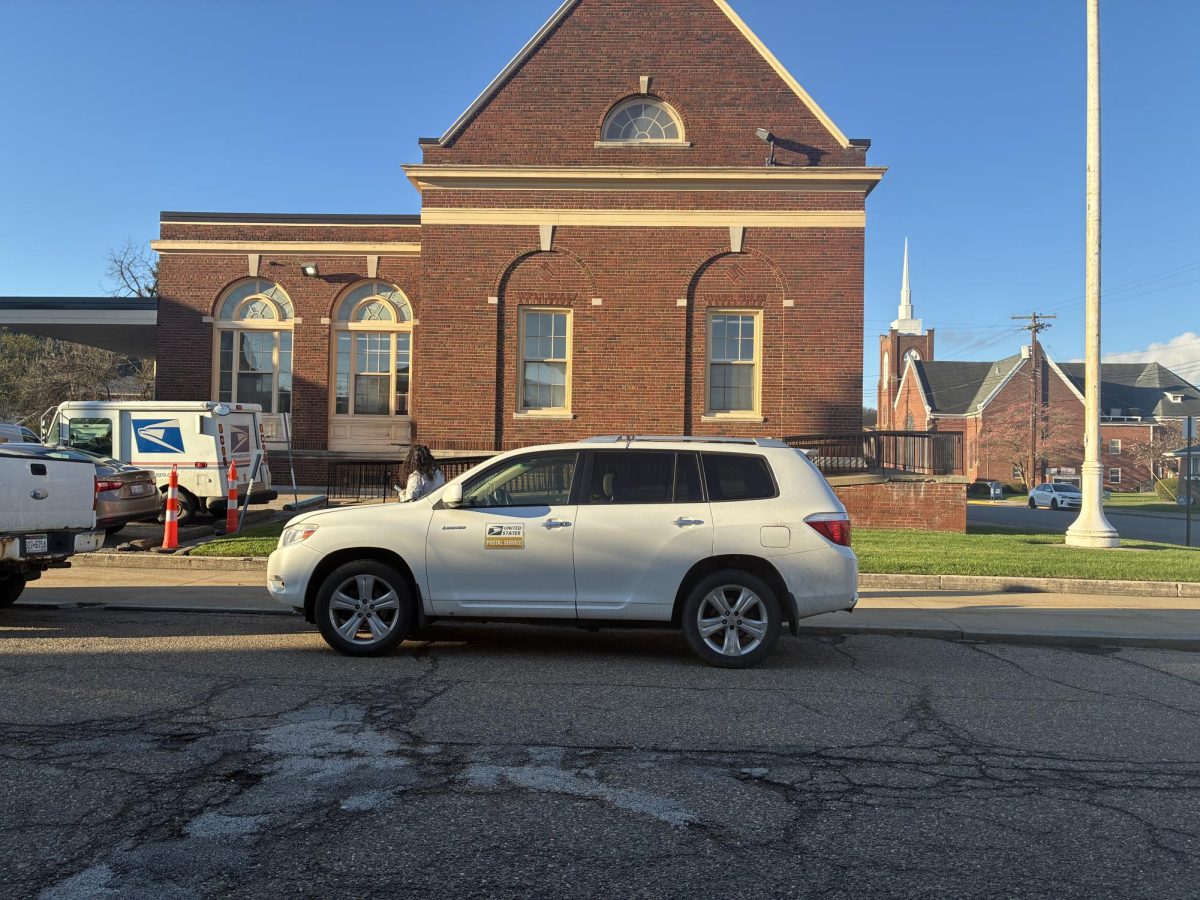


Four months ago, Wheeling, West Virginia’s communities were tested. It was a normal day for most, but the last normal day for many. In the span of 40 minutes, three to five inches of rain fell upon the streets. As the rain poured, the creeks started to rise, and so did houses, cars, and trees. A community literally and figuratively uprooted in a time of unprecedented weather.
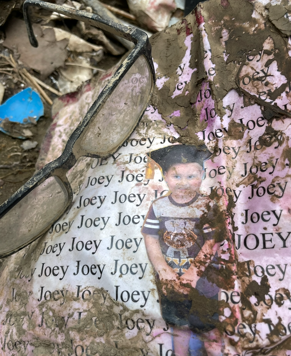
Photo courtesy of Mrs. Freeman (ella mae wheeler)
Ms. Templeton is a science teacher here at Wheeling Park High School. She touched on how, due to global warming and climate change, flooding has become more common.
“Warmer air holds more moisture, so as temperatures increase, it leads to heavier rainfall during storms. More intense storms can also overwhelm drainage systems and riverbanks. Together, those factors make flash floods and other types of flooding more common and severe,” said Templeton.
Unfortunately, these flash floods aren’t as uncommon anymore, seeing as how in the same timeline, the Hill Country region of Texas was flooded, causing their community to also be torn apart. The difference between these two tragic events is the response timeline of FEMA. FEMA, or the Federal Emergency Management Agency, is an agency within the United States Government that is held responsible for coordinating with local governments in response to disasters that overwhelm local and state resources. It took less than a week for FEMA to aid in the Texas flash floods, while it took FEMA to aid the communities of Wheeling more than a month.

Photo courtesy of Mrs. Freeman (ella mae wheeler)
For most residents affected by these floods, the wait for this aid felt like a lifetime. Mrs. Freeman is an art teacher at Wheeling Park High School and was unfortunately deeply affected by the flood. She talked with me about her experience and how it felt in the moment.
“When I saw the water rising above the guard rail, I told my children to get in the truck and locked the cats inside the bathroom. We left as we saw water coming from multiple directions and the creek pulling down trees with the current. We evacuated quickly up the road right in time. Neighbors who saw us pull out later told me the wall of water came directly after us, washing neighbors in vehicles as it came just a moment after we pulled out. The neighbors thankfully survived, standing on shipping containers and their mobile homes or inside their houses as the water rose and receded,” said Freeman.
A true testament to how Mrs. Freeman’s thinking saved her and her children’s lives. Unfortunately, her home became extremely damaged. Not only this, but some of her family members were also affected by this flood.
“All the childhood homes my children know were affected by this flood. We spent the next few weeks hopping between the three sites just trying to help where we could. What the water did not leave muddy, the mold affected within 6 short days. We were displaced in a temporary house for 4 months and one day,” said Freeman.
Mrs. Mamakos is a history teacher here at Wheeling Park High School, and did not hesitate to jump in and help the community right after the flood.
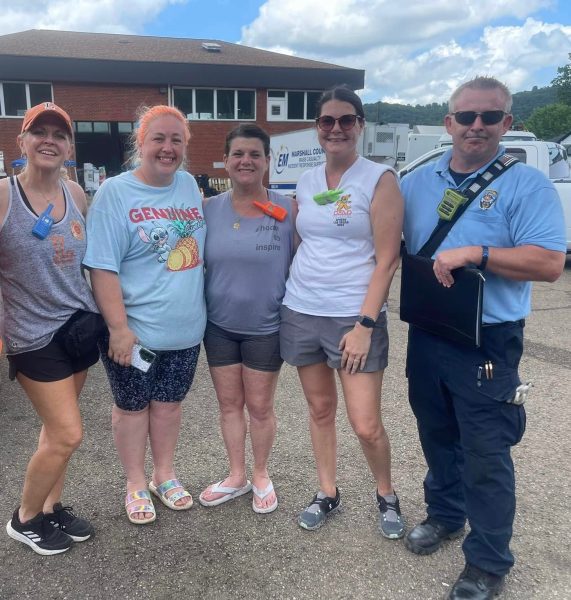
Photo courtesy of Mrs. Mamakos (Ella Mae Wheeler)
“My son and I saw a live video of flood relief taking place at Riesbecks the day after the flood, and we immediately left to help. We helped set up the Armory location first. We then moved to Wheeling University, because it was indoors and had a lot more space. Breanna Dietrich and I called to the public for supplies, mostly using Live videos and posts on Facebook. People from around the community heard the call and aided in any way they could. I was so very blessed to be a part of something so amazing. Amongst all the devastation, there were so many who stepped up to help,” said Mamakos.
In the face of this sudden tragedy, neighbors and local leaders mobilized. Amy Jo Hutchison is a Triadelphia resident and community organizer by profession and works as the WV Campaign Director for MomsRising, a national nonprofit. She has been an organizer professionally for about 10 years. She explained how the floods have affected the community, and how the community has come together to build in backup.
“The community is the only way we could have done any of this recovery work. From donating supplies to volunteering at the church where I was stationed to mucking out mud and yuck from houses to donating money and resources…we had volunteer therapists for survivors to talk to and pastors from local churches…we had people going door to door to have forms filled out for FEMA, people running supplies on their four wheelers from the fire department,” said Hutchison.
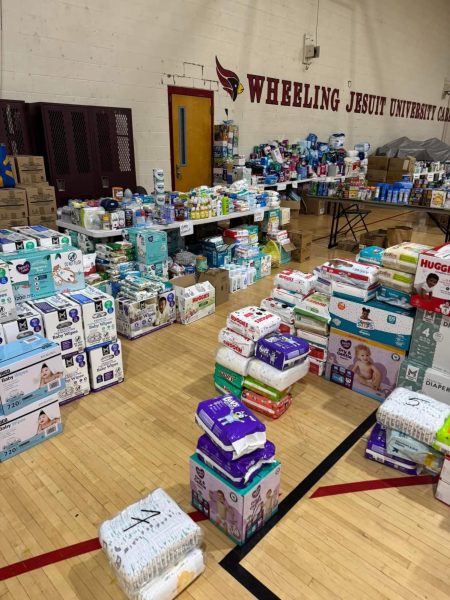
Photo courtesy of Mrs. Mamakos (Ella Mae Wheeler)
Adding to this, Mrs. Freeman also saw the community outreach as a blessing, seeing as how many different organizations came together to help people in need.
“The community outreach was absolutely amazing. Valley Grove Volunteer Fire members were visiting us daily to deliver what we needed on side-by-sides. Churches dropped off meals. My family friends purchased shoes, clothes, and hygiene items and dropped them off. Family friends took my three children with them on a family vacation so that they could get away from the area. The little church in Triadelphia was an hourly block-walk to use the restroom, get water, and eat,” said Freeman.
In this time of uncertainty and chaos, and not much federal aid, all that was left in the community were the people. Not even the next day, efforts of flood relief were in full swing, neighbors helping neighbors, and even people coming in from out of town to help this community. From there, what started as a one-drop-off point became the beating heart of Wheeling’s recovery.
“Community organizing is to bring people together who are experiencing the same issue and work together to find a solution. In this case, we needed supplies and help in a number of different ways, so I used my skills and connections to get things moving,” said Hutchison.
Within the following days, the Triadelphia Methodist Church parking lot was transformed into a command center- a space filled with food, volunteers, and most importantly, hope.
“One thing led to another, and we (community members stationed at Triadelphia Methodist Church) became the hub for the community. We had supplies and food, therapists, the Health Dept, organizations with forms and info that needed handled. The list goes on and on,” said Hutchison.
Nonetheless, the community strung together in a time of trial to build the community back up. Different teams from local schools pitched in, lending their helping hands, different church’s lended supplies, but it wasn’t where you came from- it was the cause you were helping.
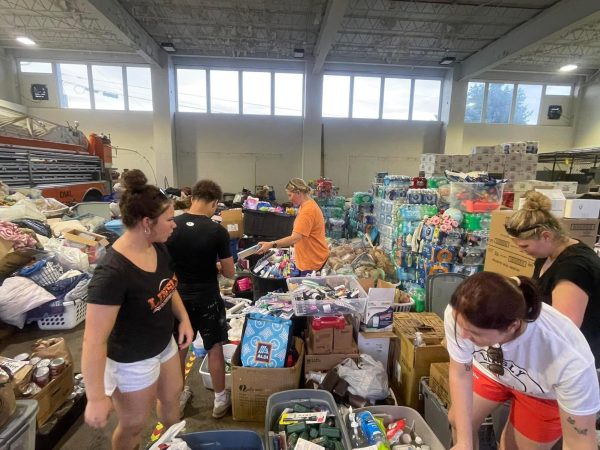
Photo courtesy of Mrs. Mamakos (Ella Mae Wheeler)
“I am so proud of the youth in the community who came out to volunteer with us, especially my son, Georgie, who was there every single day working right beside me throughout the entire summer. I made calls to Wheeling Park High School, Central, and Linsly, and all three schools sent their youth teams to join in the relief and recovery efforts. Day in and day out, we had a new team there to help. I have been blessed to meet so many wonderful people, from the very young to the elderly, and so many in between who came to help us. I am especially grateful to the beautiful group of women who stuck it out with me until the end which for us was the closing of the Wheeling University relief location. It was a wonderful experience to see all that is good in this world. This is an experience I will never, ever forget,” said Mamakos.
Delving back into the lack of financial help from FEMA, despite the devastating and heartbreaking impact the flood in Wheeling had, the response of FEMA has been inadequately slow. To expand on the cost of the affected areas, and how much is being compensated for in the status quo, an estimate of the cost of repairs for the Triadelphia community is set at $1.2 million, but as the community starts the repairing process, they face many difficulties in finding funding. More specifically, about six households applied for FEMA assistance, and only two were accepted, and those accepted households were only granted $20,000.
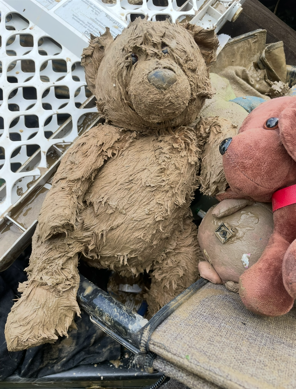
Photo courtesy of Mrs. Freeman (Ella Mae Wheeler)
The true cost of this flood goes far beyond the community’s property and possessions. Nine lives were tragically lost in the flood, including a three-year-old girl and her mother. For others, the emotional and psychological wounds of these losses will take longer to fix than any bridge or home.
“So many people were devastated by the floods. Some people lost everything. Some people lost loved ones. Things can be replaced, but people never can. I saw so much resilience in those who were affected by the floods,” said Mamakos.
Though this immense loss is met with an unsatisfactory response from FEMA that falls painfully short of what is needed to aid this community, the $20,000 that was granted to the two households ( out of six that applied ) is simply not a substantial amount when faced with the utter reality of infrastructure, homes, vehicles, and families being lost. For families who have lost everything in an instant, this sum is ridiculous. The scale and urgency of the state’s response make the delays and denials from FEMA even more difficult to justify and accept.
“This was land and these homes that were passed down through generations, now gone, lost forever. There was also the second flood that went through Elm Grove, Bethlehem, National Road, etc. People who were hit by the second flood did not get any help from FEMA, and insurance does not cover “acts of God.” There is a lot of work that still needs to be completed,” said Mamakos.
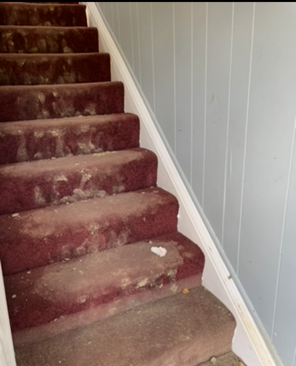
Photo courtesy of Mrs. Freeman (Ella Mae Wheeler)
The disparity between the scale of damage and the aid is broken, leaving the community broken. While residents stepped up to fill the gap, the bills of rebuilding continue to grow higher- especially as winter rounds the corner. Adequate federal assistance remains a critical necessity. The experience of this flood is a constant reminder that a system that is designed to offer relief in the nation’s darkest hours must obtain better results. Until FEMA acknowledges the true and realistic scope of this tragedy and responds with substantial support, communities like Wheeling will continue to carry this burden alone.
“It deeply affected our community, but it brought us together, too. The power of humans volunteering and loving on other humans will change you and make you understand the world and be grateful in a different way. The community and my neighbors have been a huge light for us in this experience. We are looking at the silver lining of our beautiful house rebuild and being able to have a Christmas tree in the corner of our living room soon!” said Freeman.
While Ohio County may still be rebuilding one day at a time, its resilience is undeniably there. Because when the waters rose, so did the members of the community to help in a time of need.